Shop Page
Filters Sort results
Reset Apply
Pic | Add | Part Number | Description | Details | View | ||||||||||||||||||||||||||||||||||||||||||||||||||||||||||||||||||||||||||||||||||||||||||||||
|---|---|---|---|---|---|---|---|---|---|---|---|---|---|---|---|---|---|---|---|---|---|---|---|---|---|---|---|---|---|---|---|---|---|---|---|---|---|---|---|---|---|---|---|---|---|---|---|---|---|---|---|---|---|---|---|---|---|---|---|---|---|---|---|---|---|---|---|---|---|---|---|---|---|---|---|---|---|---|---|---|---|---|---|---|---|---|---|---|---|---|---|---|---|---|---|---|---|---|---|
| Balance Weights (46) | |||||||||||||||||||||||||||||||||||||||||||||||||||||||||||||||||||||||||||||||||||||||||||||||||||
 | 5010901-6 | The 5010901-6 is the mid-size stainless steel weight in the 5010901 series… Show more (+) The 5010901-6 is the mid-size stainless steel weight in the 5010901 series at 0.45″. Stainless construction is selected when the driveshaft operates in an environment where corrosion protection is a priority — marine vessels with driveshafts in wet bilge areas, agricultural equipment, and vehicles operated in high-salt-use road conditions.SKU5010901-6MaterialStainless SteelProfile0.45″Available sizes5010901-6 (0.45″), 5010901-8 (0.65″), 5010901-11 (0.96″)When selecting from the 5010901 series, match the profile size to the correction mass required. The profile dimension corresponds to the physical length/width of the weight — a larger profile at a given profile number does not always mean proportionally more mass. Weigh the candidate weight on a precision scale to confirm mass before installation. Show less (-) | |||||||||||||||||||||||||||||||||||||||||||||||||||||||||||||||||||||||||||||||||||||||||||||||||
 | 5010901-8 | 5010901-8 Stainless Steel Balance Weight — 0.65″ ProfileThe failure mode that justifies… Show more (+) 5010901-8 Stainless Steel Balance Weight — 0.65″ ProfileThe failure mode that justifies stainless steel balance weights: a standard carbon steel weight in a high-moisture environment — salt roads, off-road water crossings, undercarriage spray — rusts and loses mass over time. When a weight loses even 1-2 grams to corrosion, the driveshaft goes back out of balance. The 5010901-8 in stainless steel eliminates that long-term drift.SpecValueSKU5010901-8MaterialStainless SteelProfile size0.65″Series5010901 (multiple sizes)Welding stainless steel balance weights to carbon steel driveshaft tubes requires attention to filler metal selection. Use ER309L filler to bridge the dissimilar metal joint. Do not use ER70S-6 carbon steel wire — the weld will be susceptible to galvanic corrosion at the joint, undermining the corrosion protection the stainless weight was selected for. Show less (-) | |||||||||||||||||||||||||||||||||||||||||||||||||||||||||||||||||||||||||||||||||||||||||||||||||
 | 98-1492-2 | 98-1492-2 — 0.06 oz Micro Trim Weight The smallest correction in… Show more (+) 98-1492-2 — 0.06 oz Micro Trim Weight The smallest correction in the 98-series lineup, reserved for precision final-pass balancing.A driveshaft balanced to 0.10 oz-in tolerance at 3,000 RPM generates approximately 0.3 lbs of centrifugal force. At 0.06 oz correction mass, the 98-1492-2 is addressing the last fraction of that force. This weight class is used in performance applications, precision machine shops, and OEM assembly lines where road-speed vibration targets are aggressive — typically under 50 microinches/second velocity at the floor pan.The 98-series numeric designation indicates OEM compatibility. Cross-reference with the original driveshaft assembly drawing if working on a factory rebuild. Do not substitute with a generic balance weight at a different mass — the correction will be wrong. Show less (-) | |||||||||||||||||||||||||||||||||||||||||||||||||||||||||||||||||||||||||||||||||||||||||||||||||
 | 98-1562-2 | The 98-1562-2 is the lighter unit in the 98-1562 family at 0.27… Show more (+) The 98-1562-2 is the lighter unit in the 98-1562 family at 0.27 oz. Selecting between the -2 and -3 variants depends entirely on the balancing machine readout — do not estimate. A 0.27 oz weight placed where 0.45 oz is needed leaves 0.18 oz of residual imbalance, which on a highway-speed driveshaft will still produce noticeable vibration above 60 mph.SKU: 98-1562-2Weight: 0.27 ozFamily: 98-1562 series (also available: -3 at 0.45 oz)Application: OEM-style driveshaft tube balancingInstallation note: the OEM mounting profile may differ from generic round or H-shaped weights. Confirm the mating surface geometry matches your tube diameter before welding. These weights are designed for specific tube profiles and may not sit flush on non-OEM replacement tubes. Show less (-) | |||||||||||||||||||||||||||||||||||||||||||||||||||||||||||||||||||||||||||||||||||||||||||||||||
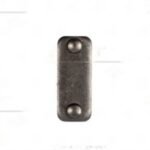 | 98-1562-3 | 98-1562-3 Balance Weight — 0.45 ozThe 98-series balance weights follow an OEM… Show more (+) 98-1562-3 Balance Weight — 0.45 ozThe 98-series balance weights follow an OEM numbering convention used by several driveshaft manufacturers for factory-replacement balancing. The 98-1562-3 at 0.45 oz is the heaviest of the 98-1562 family, used when the correction requirement exceeds the 98-1562-2’s 0.27 oz capacity.SKU98-1562-3Weight0.45 ozSeries98-1562 (lightest to heaviest: -2, -3)StyleOEM-compatible tube-mountWhen sourcing replacement balance weights for an OEM driveshaft, the part number on the original weight should be matched exactly. Substituting a heavier weight from the same series introduces overcorrection. If the original weight is missing or unreadable, the balancing machine must be used to determine the correct correction mass. Show less (-) | |||||||||||||||||||||||||||||||||||||||||||||||||||||||||||||||||||||||||||||||||||||||||||||||||
 | BW1 | Trim corrections under 5 grams represent the last decimal place in driveshaft… Show more (+) Trim corrections under 5 grams represent the last decimal place in driveshaft balancing. The BW1 at 4.0 grams (0.14 oz) is used when a previous correction pass leaves a residual that a machine still flags — typically in high-speed or precision applications where the balance tolerance is 0.1 oz-in or tighter.Q: When does a driveshaft need balance weight correction at the BW1 level?A: After any service that disturbs tube mass distribution: new weld yoke installation, straightening a bent tube, or replacing a worn U-joint with a unit of slightly different mass. The balancing machine will identify the residual; the BW1 closes it.Q: Can BW1 be placed adjacent to an existing balance weight?A: Yes, but keep at least 1 inch of separation between weights to avoid heat interaction during welding. Placing two weights too close together can cause the first tack weld to reheat and shift.Weight: 4.0 g / 0.14 ozMaterial: SteelProfile: Round Show less (-) | |||||||||||||||||||||||||||||||||||||||||||||||||||||||||||||||||||||||||||||||||||||||||||||||||
| | BW15G | The BW15G fills a gap between the BW1 / BW2 range and… Show more (+) The BW15G fills a gap between the BW1 / BW2 range and the heavier BW5 / BW6 weights. At 0.53 oz (approximately 15 grams), it is the go-to choice when a balancing machine reads a correction requirement that is too large for a single BW4 but would be overcorrected by a BW5. Using two BW4 weights to hit the same mass introduces placement variables — a single BW15G eliminates that complication.SpecValueSKUBW15GWeight0.53 oz / ~15 gApplicationMid-range primary correctionProfileStandard tube-mountMid-range corrections in the 0.5 oz zone are common on rear driveshafts of half-ton trucks after a U-joint replacement — the new joint may have slightly different mass distribution than the worn original. Keep BW15G in stock alongside BW4 and BW5 to cover the 10-20 gram correction range without stacking. Show less (-) | |||||||||||||||||||||||||||||||||||||||||||||||||||||||||||||||||||||||||||||||||||||||||||||||||
 | BW1A | BW1A Aluminum Balance Weight — 4.2 Gram (0.14 oz)The BW1A represents the… Show more (+) BW1A Aluminum Balance Weight — 4.2 Gram (0.14 oz)The BW1A represents the fine end of the aluminum balance weight scale. At 4.2 grams (0.14 oz), this is a trim-correction weight — not a primary correction weight. An upgrade path scenario: if you removed a worn driveshaft that vibrated and the replacement shaft shows 0.14 oz residual imbalance at the machine, the BW1A closes that gap in one weld rather than requiring a second pass with a smaller shim.Aluminum at this weight means the physical size is slightly larger than BW1 steel, but both deliver 0.14 oz of correction. Choose aluminum when you need a slightly larger contact surface for the weld bead, or when working on lighter-weight aluminum driveshaft tubes where thermal input during welding must be minimized.Weight: 4.2 g / 0.14 ozMaterial: AluminumWeld wire: ER4043 or ER5356 recommended Show less (-) | |||||||||||||||||||||||||||||||||||||||||||||||||||||||||||||||||||||||||||||||||||||||||||||||||
 | BW2 | SKUBW2MaterialSteelWeight5.0 g / 0.17 ozProfileRoundApplicationFine trim correction, final balance passAt 5 grams… Show more (+) SKUBW2MaterialSteelWeight5.0 g / 0.17 ozProfileRoundApplicationFine trim correction, final balance passAt 5 grams, the BW2 is at the threshold where placement error has a significant relative impact. A 5-gram weight placed 30 degrees off the correction vector delivers only 4.3 grams of effective correction — an 0.7-gram shortfall that a balancing machine operating at tight tolerance will flag. For this reason, always use a balancing machine with angular resolution of at least 5 degrees when working with weights under 10 grams.The round profile of the BW2 makes it easy to position on curved tube surfaces. Keep a supply of multiple sizes — BW1 through BW3 — during a final balance pass so you can select the closest single weight rather than stacking two smaller ones. Show less (-) | |||||||||||||||||||||||||||||||||||||||||||||||||||||||||||||||||||||||||||||||||||||||||||||||||
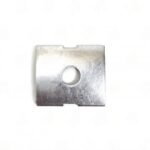 | BW2A | The BW2A at 5.4 grams (0.19 oz) aluminum is one of the… Show more (+) The BW2A at 5.4 grams (0.19 oz) aluminum is one of the smallest weights in the balance weight lineup. These are typically used when the balancing machine shows a residual imbalance after a larger primary correction weight has already been placed — the technician needs to fine-tune without displacing the primary weight.Weight: 5.4 g / 0.19 ozMaterial: AluminumApplication: Trim correction, final-pass balancingWeld requirement: Aluminum-compatible wire (ER4043/ER5356)Companion: BW2 steel (5.0 g equivalent)Installation tip: when placing two weights in the same correction plane, space them angularly rather than stacking. Two 5-gram weights placed 20 degrees apart create a vector resultant of approximately 9.7 grams at 10 degrees from the heavier placement — not 10 grams at the midpoint. Factor this vector math into multi-weight corrections to avoid a third pass. Show less (-) | |||||||||||||||||||||||||||||||||||||||||||||||||||||||||||||||||||||||||||||||||||||||||||||||||
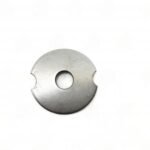 | BW3 | BW3 Steel Round Balance Weight — 8.0 Gram (0.28 oz)Failure mode context:… Show more (+) BW3 Steel Round Balance Weight — 8.0 Gram (0.28 oz)Failure mode context: a driveshaft that vibrates only above 65 mph but feels smooth at lower speeds is usually exhibiting a high-speed imbalance — the correction mass needed is often in the 5-15 gram range. That’s the BW3’s territory. The round profile minimizes aerodynamic disturbance at speed compared to irregular or H-shaped weights, though the difference is measurable only on very high-speed applications.Steel construction means standard MIG welding procedure applies — clean the tube surface with a wire brush, tack at two points before full weld, and allow the tube to cool before the final balance check. Quenching with water is not recommended as it can cause localized tube distortion in thin-wall chromoly shafts.SpecValueSKUBW3MaterialSteelWeight8.0 g / 0.28 ozProfileRound Show less (-) | |||||||||||||||||||||||||||||||||||||||||||||||||||||||||||||||||||||||||||||||||||||||||||||||||
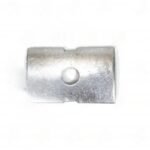 | BW3A | At 7.8 grams (0.27 oz), the BW3A aluminum H-shape weight is primarily… Show more (+) At 7.8 grams (0.27 oz), the BW3A aluminum H-shape weight is primarily a fine-correction tool. The H-profile design is the same philosophy as the BW4A — the saddle shape locks the weight’s angular position against the tube wall while the technician double-checks the balancing machine readout before tacking.SKUBW3AMaterialAluminumWeight7.8 g / 0.27 ozProfileH-shape (straddle mount)Use caseFine-correction pass after primary weight placementNote that aluminum H-weights require aluminum-compatible welding consumables. Do not attempt to MIG-weld these with standard ER70S-6 steel wire — the weld will be brittle and the weight can dislodge at operating RPM, creating a dangerous imbalance condition. Show less (-) | |||||||||||||||||||||||||||||||||||||||||||||||||||||||||||||||||||||||||||||||||||||||||||||||||
 | BW3G | BW3G — 0.1 oz Trim Balance Weight For fine correction passes… Show more (+) BW3G — 0.1 oz Trim Balance Weight For fine correction passes where a heavier weight overshoots the target residual imbalance.After placing primary correction weights, balancing machines frequently show a small residual imbalance that a full BW3 steel weight would overcorrect. The BW3G fills this gap — at 0.1 oz (approximately 2.8 grams), it handles trim corrections without introducing a new imbalance on the correction pass. Professional driveshaft shops keep a range of trim weights like the BW3G on hand specifically for the final pass, where tolerances are typically tightened to 0.05 oz-in or better for highway-speed applications.Confirm the exact angular position from your balancing machine before committing to the weld. At this mass level, a 15-degree error in placement angle can require a second trim pass. Show less (-) | |||||||||||||||||||||||||||||||||||||||||||||||||||||||||||||||||||||||||||||||||||||||||||||||||
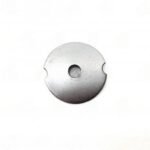 | BW4 | BW4 Steel Balance Weight — 10.0 Gram (0.35 oz)Ten grams sits in… Show more (+) BW4 Steel Balance Weight — 10.0 Gram (0.35 oz)Ten grams sits in an interesting zone for driveshaft balancing — heavy enough to make a meaningful correction but light enough that placement precision becomes critical. A 10-gram weight at the wrong angular position on a 3.5-inch tube can actually worsen the imbalance if placed more than 90 degrees off the correction vector.The BW4 uses a round profile with flat mating surface for consistent weld prep. Steel construction means it can be welded with standard MIG wire without special gas blends. Common applications include finishing corrections on rebuilt driveshafts after tube straightening, or compensating for asymmetric weld buildup at yoke joints.Weight: 10.0 g / 0.35 ozMaterial: SteelProfile: RoundWeld compatible: Yes (standard MIG/TIG) Show less (-) | |||||||||||||||||||||||||||||||||||||||||||||||||||||||||||||||||||||||||||||||||||||||||||||||||
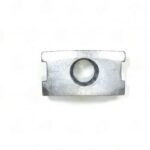 | BW4A | The H-shape profile on the BW4A is not cosmetic — it serves… Show more (+) The H-shape profile on the BW4A is not cosmetic — it serves a functional purpose. The H cross-section straddles the driveshaft tube, locking the weight’s angular position while you confirm the correction angle from the balancing machine before tack-welding. Flat-profile weights can rotate on the tube if bumped, introducing errors. At 9.6 grams (0.33 oz) aluminum, this is in the fine-correction range where small angular errors have disproportionate effects on residual imbalance.Q: Why aluminum at this weight class?A: At under 10 grams, the mass difference between steel and aluminum is marginal, but the H-profile aluminum design is easier to grip and position on a spinning tube during a dynamic balance check.Q: Can BW4A be welded?A: Yes, tack-weld using a MIG setup at reduced amperage. Aluminum requires different wire (ER4043 or ER5356) — do not attempt to weld aluminum balance weights with steel MIG wire. Show less (-) | |||||||||||||||||||||||||||||||||||||||||||||||||||||||||||||||||||||||||||||||||||||||||||||||||
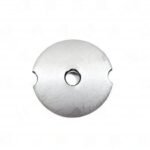 | BW5 | SKUBW5MaterialSteelWeight20.0 g / 0.70 ozProfileRoundApplicationDriveshaft tube balance correctionThe BW5 round steel balance… Show more (+) SKUBW5MaterialSteelWeight20.0 g / 0.70 ozProfileRoundApplicationDriveshaft tube balance correctionThe BW5 round steel balance weight is the workhorse of the 20-gram correction range. Steel construction gives it a compact cross-section, making it straightforward to position and tack-weld without interfering with tube clearances inside transmission tunnels. When a balancing machine indicates a 0.70 oz correction, the BW5 closes that gap in a single weight rather than stacking two smaller ones — stacking introduces its own placement tolerance errors.Verify the correction plane position from the machine readout before welding. A weight placed at the right mass but wrong angular location simply shifts the vibration to a new frequency rather than eliminating it. Use a center punch to mark the tube at the correct angle before committing to the weld. Show less (-) | |||||||||||||||||||||||||||||||||||||||||||||||||||||||||||||||||||||||||||||||||||||||||||||||||
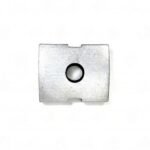 | BW5A | The BW5A is the aluminum counterpart to the BW5 steel weight, both… Show more (+) The BW5A is the aluminum counterpart to the BW5 steel weight, both delivering 20.0 grams (0.70 oz) of correction mass. The case for choosing aluminum here is specific: on high-RPM driveshafts — typically front driveshafts on AWD vehicles spinning above 4,000 RPM at highway speed — the rotational inertia contribution of each added gram is amplified. Aluminum’s lower density means the BW5A is physically larger than BW5 steel at the same mass, so account for that when planning weld placement near yoke transitions.Weight: 20.0 g / 0.70 ozMaterial: AluminumProfile: Standard flat/round for tube mountingApplication: Driveshaft tube balance correctionPairs with: BW5 (steel equivalent at same mass)When balancing to tighter tolerances (under 0.1 oz-in residual), aluminum weights allow finer incremental adjustments since the larger physical size makes placement angle more influential on the final correction vector. Show less (-) | |||||||||||||||||||||||||||||||||||||||||||||||||||||||||||||||||||||||||||||||||||||||||||||||||
 | BW6 | BW6 Steel Balance Weight — 30.0 Gram (1.05 oz)A common mistake during… Show more (+) BW6 Steel Balance Weight — 30.0 Gram (1.05 oz)A common mistake during driveshaft balancing is grabbing the closest weight available rather than the correct mass. The BW6 is a round-profile steel balance weight weighing exactly 30.0 grams (1.05 oz). When your balancing machine calls for roughly one ounce of correction, this is the weight to reach for — not a lighter BW5 or a heavier combination that throws off the correction plane.Steel construction gives the BW6 a smaller physical footprint than an equivalent aluminum weight, which matters on smaller-diameter tubes where real estate is tight. The round profile sits flush against the tube and accepts a standard weld bead without warping or rolling during tack-welding.Used by driveshaft rebuild shops, OEM assembly lines, and mobile driveshaft balancing services. Always confirm the weight requirement from the balancing machine readout before selection — adding even 5 grams over the correction amount moves the residual imbalance to the opposite correction plane and forces a second pass.SpecValueSKUBW6MaterialSteelWeight30.0 g / 1.05 ozProfileRound Show less (-) | |||||||||||||||||||||||||||||||||||||||||||||||||||||||||||||||||||||||||||||||||||||||||||||||||
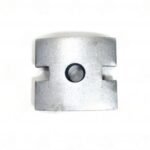 | BW6A | BW6A Aluminum Balance Weight — 27.4g H-ShapeBW6A is an aluminum balance correction… Show more (+) BW6A Aluminum Balance Weight — 27.4g H-ShapeBW6A is an aluminum balance correction weight in an H-shape with center hole, at 27.4 grams (0.97 oz), packaged 50 per box. Aluminum balance weights are specified for use on aluminum driveshaft tubes where using steel correction weights would create a dissimilar metal pair at the attachment point. Over time — especially in wet or salty environments — a steel weight on an aluminum tube can accelerate galvanic corrosion at the weld or fastener location.SpecValueWeight27.4g / 0.97ozMaterialAluminumShapeH-shape with center holeBox Qty50The H-shape provides more surface area for weld attachment compared to a round shape at the same mass, which can improve the adhesion and durability of the weld joint attaching the weight to the tube. Balance shops working on aluminum driveshafts should stock aluminum weights in multiple denominations (BW6A, BW6G) to cover the same range of correction masses available in the steel DLW series.See all balance weight options and stub and midship shaft components for aluminum driveshaft fabrication. Show less (-) | |||||||||||||||||||||||||||||||||||||||||||||||||||||||||||||||||||||||||||||||||||||||||||||||||
| | BW6G | BW6G is a driveshaft balance correction weight rated at 0.21 oz (approximately… Show more (+) BW6G is a driveshaft balance correction weight rated at 0.21 oz (approximately 5.95 grams). BW-series weights differ from DLW-series weights — the BW designation appears in the aluminum balance weight line (see BW6A), though BW6G’s material designation is not explicitly listed in available data. Verify the material (steel or aluminum) and shape specifications against your application requirements before ordering.Part Number: BW6GWeight: 0.21oz (approx 5.95g)If this weight is used on an aluminum driveshaft tube, confirm it is compatible (aluminum weight on aluminum tube prevents galvanic corrosion at the attachment point). Using a steel weight on an aluminum tube can cause dissimilar metal corrosion over time, particularly in environments with road salt exposure.Browse all balance weight options and see stub and midship shaft for driveshaft fabrication supplies. Show less (-) | |||||||||||||||||||||||||||||||||||||||||||||||||||||||||||||||||||||||||||||||||||||||||||||||||